MAGI-2 vs Kling AI: Length, Audio, References & Workflow
Compare Sand.ai’s MAGI-2 flagship against Kuaishou’s Kling AI creator workflows across clip duration, synchronized audio, reference conditioning, and practical testing criteria.
Workflow & Specification Overview
Sand.ai MAGI-2 Official Release ↗
| Dimension | MAGI-2 (Sand.ai) | Kling AI (Kuaishou) |
|---|---|---|
| Model & Developer | Sand.ai flagship MAGI-2 (480B total / ~28B active), released Nov 24, 2026 | Kuaishou Kling AI creator platform and multi-generation video model suite |
| Published Output | 4–30 seconds in a single pass, 1080p at 25 fps, 6 aspect ratios (incl. 21:9 & 9:16) | Varies by Kling model tier and mode; widely used for 5–10s+ cinematic shots |
| Native Audio | Synchronized dialogue lip-sync, foley, ambient sound & score (toggleable) | Audio/sound features depend on the active Kling tier—check official docs |
| Reference Control | Up to 10 images + 5 videos + 5 audio references, start/end frames & timeline control | First/end frame control, motion brush, and subject/camera controls by tier |
| Pricing Reference | $0.08/sec (1080p) listed on platform.sand.ai; 4 credits/sec on magi2.info | Subscription plans and credit tiers varying by model version and quality mode |
Comparison FAQ
When should creators test MAGI-2 vs Kling AI?
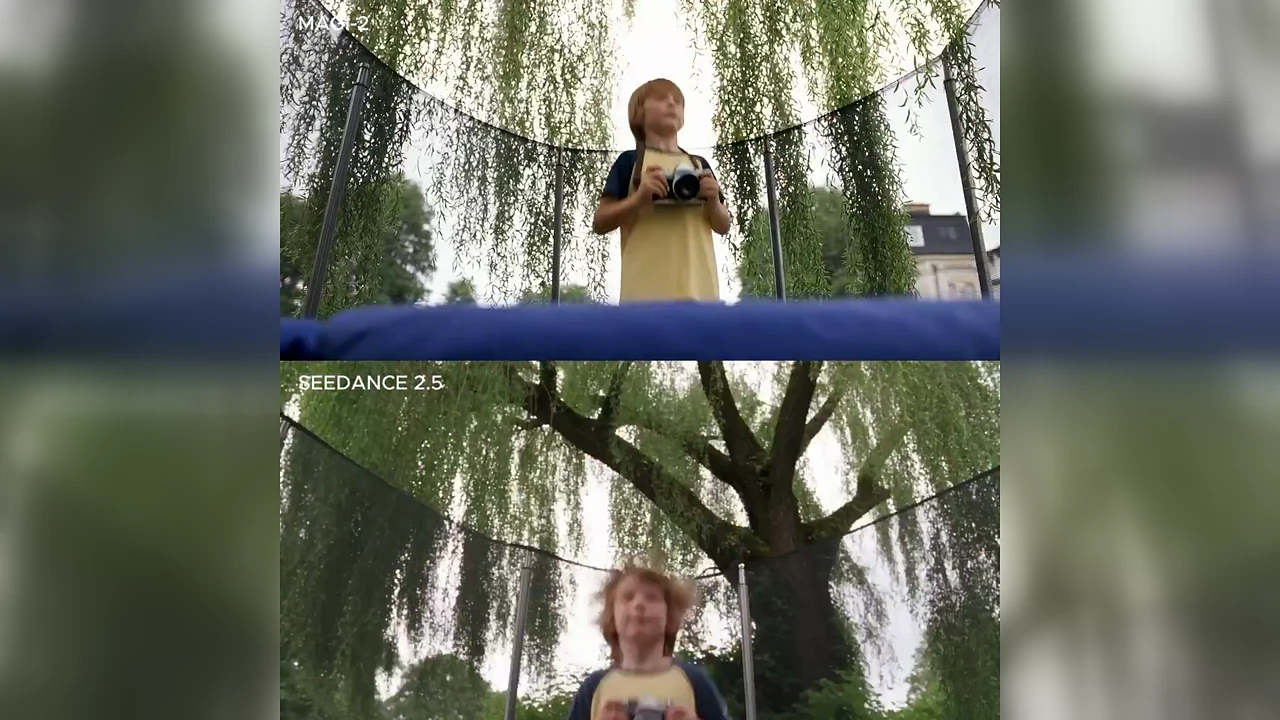
Start with MAGI-2 when you need 15–30 second single-pass continuity, synchronized native dialogue, or multi-modal (image + video + audio) references. Test Kling AI side by side when you rely on its camera-motion presets or existing creator workflow.
How should I benchmark MAGI-2 and Kling AI fairly?
Use the exact same first-frame image, aspect ratio, clip duration, and motion prompt on both platforms, and compare consistency, audio sync, and effective cost per usable clip.